
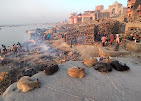
Kashi Manikarnika Ghat
Kashi Manikarnika Ghat: A Sacred Abode of Moksha
Kashi Manikarnika Ghat, nestled on the banks of the holy Ganges in Varanasi, is one of India’s most revered and ancient ghats. It holds immense spiritual significance as the gateway to liberation (moksha). Steeped in mythology and history, this ghat serves as a focal point for Hindu cremation rituals, drawing pilgrims from across the globe.
Historical and Mythological Significance of Kashi Manikarnika Ghat
Origin of the Name
The name “Manikarnika” originates from the combination of two Sanskrit words: “Mani” (jewel) and “Karnika” (ear). According to Hindu mythology:
- Lord Shiva and Goddess Parvati visited this place. While bathing, a jewel from Parvati’s earring fell into the Ganges, giving the ghat its name.
- It is believed that Lord Vishnu created a kund (pond) here, called the Manikarnika Kund, during the cosmic dance of creation.
Role in Hinduism
Kashi Manikarnika Ghat is considered a sacred space where life and death converge. Hindus believe that those cremated here attain moksha, escaping the cycle of rebirth. The ghat represents the cyclical nature of existence, where death leads to spiritual liberation.
Why is Kashi Manikarnika Ghat Special?
- Ritual Cremation:
- The ghat operates 24/7 as a cremation ground.
- Eternal flames at the site symbolize the perpetual cycle of life and death.
- Spiritual Liberation:
- Many Hindus bring their loved ones to be cremated here, ensuring their soul’s journey toward salvation.
- Cultural Heritage:
- The ghat’s history dates back thousands of years, making it an integral part of Varanasi’s cultural tapestry.
Daily Activities at Kashi Manikarnika Ghat
- Morning Rituals:
- Witness devotees performing early morning prayers and taking holy dips in the Ganges.
- Cremation Ceremonies:
- Traditional rituals performed by priests using sandalwood, ghee, and sacred chants.
- Evening Aarti:
- The mesmerizing Ganga Aarti at nearby ghats, visible from Manikarnika, creates an ethereal ambiance.
Must-Visit Spots at Kashi Manikarnika Ghat
- Manikarnika Kund
- A sacred pond linked to Lord Vishnu’s creation legend.
- Believed to purify one’s soul upon bathing.
- Harishchandra Ghat
- Located nearby, another cremation ghat with its own rich history.
- Kashi Vishwanath Temple
- Just a short walk from the ghat, this temple is dedicated to Lord Shiva and is a must-visit for pilgrims.
How to Reach Kashi Manikarnika Ghat
By Air:
- The nearest airport is Lal Bahadur Shastri International Airport, about 25 km away.
By Train:
- Varanasi Junction Railway Station is 5 km from the ghat, with rickshaws and taxis available for easy transport.
By Road:
- Regular buses and private cabs connect Varanasi with major cities like Delhi, Allahabad, and Lucknow.
Tips for Visitors
- Respect the sanctity of the ghat and avoid taking photos during cremation rituals.
- Hire a local guide to understand the historical and cultural context better.
- Carry an extra pair of clothes if you plan to take a dip in the Ganges.
List of Key Highlights at Kashi Manikarnika Ghat
- Sacred Cremation Ground: Witness Hindu funeral rites.
- Eternal Flames: Symbolizing unending spiritual liberation.
- Mythological Relevance: Connect with stories of Shiva and Vishnu.
- Cultural Vibrancy: Observe the confluence of rituals, devotion, and history.
Frequently Asked Questions (FAQs)
- Why is Manikarnika Ghat so famous?
Manikarnika Ghat is renowned as a sacred cremation ground where Hindus believe the soul attains moksha.
- Can tourists visit Manikarnika Ghat?
Yes, tourists can visit the ghat, but it is important to respect the rituals and avoid interfering in ceremonies.
- What is the best time to visit?
Early mornings and evenings are ideal for experiencing the spiritual aura of the ghat.
Conclusion
Kashi Manikarnika Ghat is more than just a physical location; it is a spiritual epicenter of Hindu beliefs. Its rich history, profound rituals, and serene ambiance make it an essential destination for pilgrims and seekers of inner peace. A visit to this sacred ghat promises a unique glimpse into the cycle of life and death, leaving an indelible mark on one’s soul.
Leave your comment